

AI technology
Truking Technology, as an enterprise engaged in the research, development, production and sales of intelligent equipment for the entire pharmaceutical process, faces industry characteristics that place high demands on compliance and high precision. After years of research and development of priority manufacturing strategies, as well as digital transformation and upgrading, the company has already accumulated a large amount of high-quality process data, which has also become the basis for the vertical application of AI agent in Truking Technology's industrial scenario. Through data training combined with PLM/MOM data, models, drawings and technical parameters, Truking Technology gradually realizes the optimization of AI agent auxiliary parameters, as well as the intelligent preparation and recommendation of process routes, technical requirements and inspection data, realizing the intelligent integration of AI+ model in the preparation and inspection of CNC programs. Thanks to the “relative + accuracy” mode, one of the goals of the practical application plan for the Deepseek-AI agent is finally realized: intellectualization of the CAPP process.
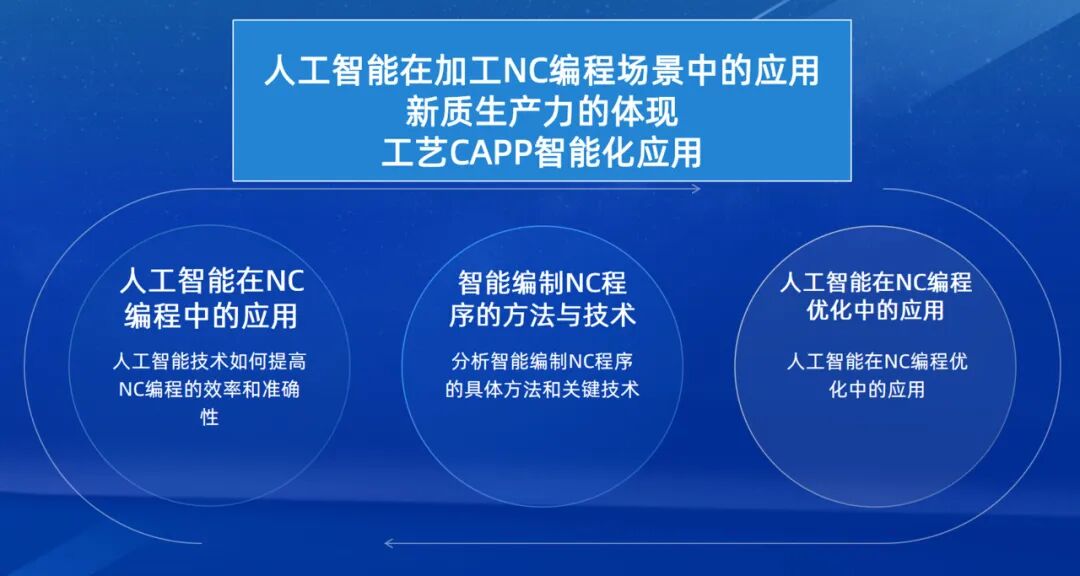
Truking TechnologyDeepseek-AI-Agent Application Purpose
01
Project history and core values
Truking Technology aims to solve the major problems of the following industries: CAPP Process Analytics:
Ensuring process accuracy and increasing efficiency to meet high compliance requirements
Bottleneck in the efficiency of manual processing of complex process data (CNC program review time is 35%)
Contradiction between the speed and quality of generating process documentation (viewing process data takes 25% of the time)
Core value of Deepseek-AI agent:
Intelligent CAPP process: delivery cycle reduced by 40%
Intelligent compilation and analysis of NC programs: reduction of manual intervention by 60%
Iteration of dynamic process accuracy: average annual cumulative gain ≥12%
02
Main application
CAPP Data Processing
Goal:
Realize intelligent compilation and optimization of process routes, technical parameters and control data.
Implementation path:
Integrate PLM/MOM data, combine 3D models and drawings, and automatically create routings and parameter recommendations.
Intelligent compilation and verification of NC programs using the AI+ algorithm to reduce manual intervention.
Dynamically adjust process parameters to ensure high accuracy and stability of the production process.
Expected results:
Process implementation cycle is reduced by 40% and manual intervention is reduced by 60%.
Intelligent CNC Programming
Goal:
Optimize your CNC programming efficiency and accuracy with AI technology.
Implementation path:
Apply the AI+ algorithm to analyze CNC programming data and optimize tool paths and machining parameters.
Implement a dynamic calibration module to monitor CNC program deviations in real time to ensure programming results meet process requirements.
Use the rules engine to implement industry specifications to automatically review and correct NC programs.
Expected results:
CNC programming efficiency increased by 200%
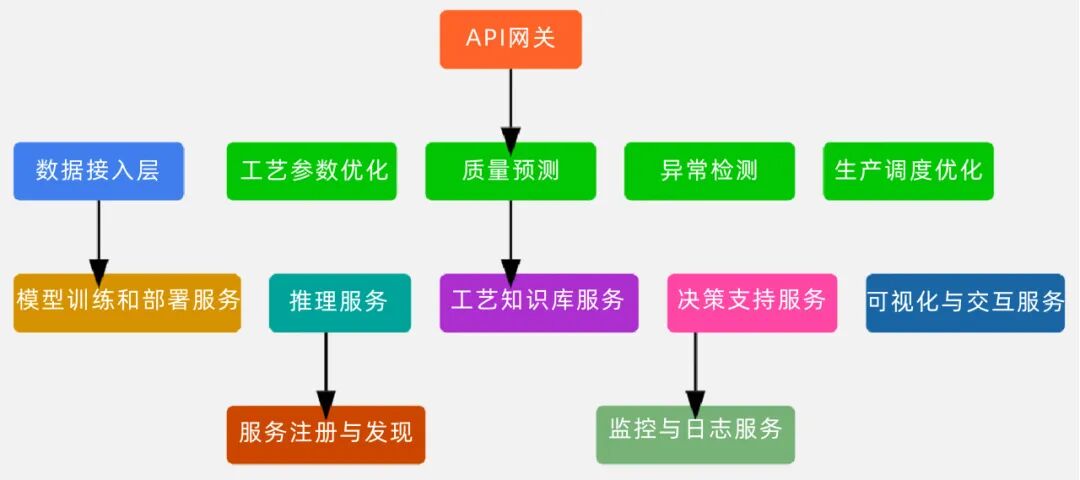
Microservice architecture project Deepseek-AI
Main features of architectural design:
Modular and loosely coupled design
Independent AI service, easily extendable and maintainable.
Centralized data access and knowledge management
Flexible deployment and expansion options.
Real-time processing and decision support
03
Implementation overview
Based on Truking Technology's requirements for high compliance and high accuracy, a "relative + accuracy mode" implementation plan is proposed, focusing on "artificial intelligence and algorithm collaboration" to improve the accuracy of the AI model while reducing the complexity of manual data processing. Key ideas include:
Double rail inspection mechanism
After the AI model produces a preliminary forecast, it is subject to secondary verification and adjustment using probability statistics and rule engines.
Closed-loop data management
From collecting data from multiple sources to reassembling feedback data, a continuously optimized data lifecycle is created.
Accuracy gradually improves.
Through dynamic benchmark comparison and a 1% accuracy iteration strategy, continuous improvement in model performance is achieved.
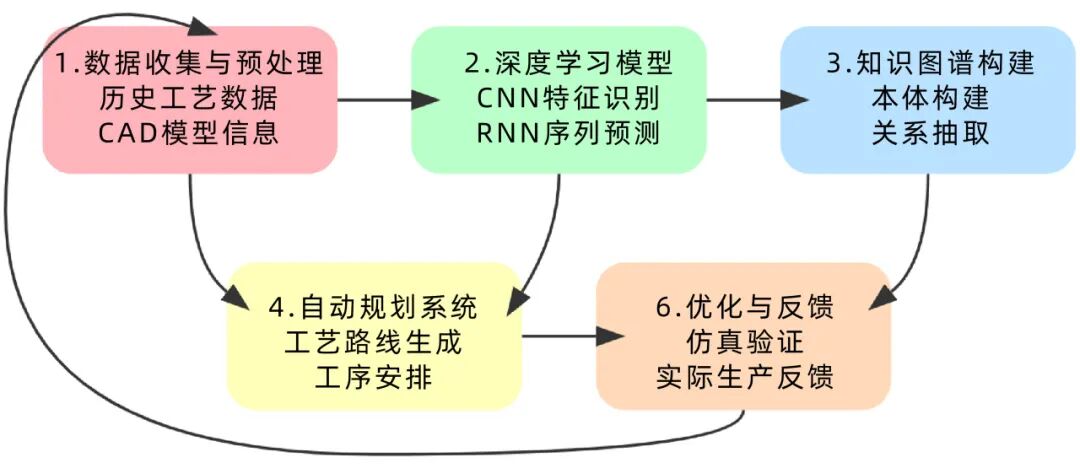
The path to implementing automatic process planning based on AI
04
Clarification of key technical points
| Stage | Details |
|---|---|
| Data collection and pre-processing | Historical process data: routes and operations of successful cases. CAD model data: product geometric characteristics. Parameters of production equipment: capabilities of machines and tools. Material properties data: processing features and heat treatment requirements. |
| Deep learning model | CNN for feature recognition and CAD model analysis. RNN for operation sequence prediction. Reinforcement learning for optimizing technological solutions. |
| Construction of a knowledge graph | Domain ontology. Extracting relationships between entities. Inference based on the knowledge graph. |
| Automatic planning system | Generation of a technological route taking into account product characteristics and equipment capabilities. Planning the content and sequence of operations. Setting processing parameters. |
| Optimization and feedback | Virtual inspection using digital twins. Collect factual feedback on quality and efficiency. Continuously train and update the AI model and knowledge graph. |
Data quality improvement technology
Data fusion from multiple sources: Integrate multimodal data such as system logs and user behavior data. Hierarchical annotation strategy: Prioritize data according to business value and use semi-automated annotation.
Model optimization system
Integrated learning framework and transfer learning: Improving model performance by adapting pretrained models to the domain. Automatic parameter tuning: Gradually optimize model parameters to improve prediction accuracy.
Mechanism of interaction of algorithms
Dynamic Validation Module: Monitor forecast variances in real time to ensure results meet process requirements. Rule Engine Design: Check the rationality of AI outputs.
System Engineering Architecture
Distributed Database: Supports columnar storage and fast search of large data. Modular service design: independent updating of data, models and verification components. Closed-loop system: User-corrected data is automatically fed back into the training process to continuously optimize the model.
05
Analysis of main ideas
AI+ Probability Statistics:
Based on the deep learning model, a probabilistic and statistical model is added to evaluate the reliability of the output predicted values using AI. Use multivariate model output comparison to improve the stability and interpretability of results.
Combination of relative and absolute precision:
"Relative + Accuracy Mode" improves forecasting accuracy through continuous iteration, verification and comparison. When there is insufficient annotated data, relative index inference is used first, and when the amount of high-quality data increases, it gradually moves to absolute accuracy calibration.
Continuous accumulation with 1% accuracy:
A small 1% improvement in accuracy with each optimization yields significant gains in large-scale applications. Using automated model monitoring and feedback mechanisms, differences in updated assessment results are quantified to form a long-term optimization engine.
Data usage and multi-level classification:
Process data layer by layer based on accuracy requirements or use cases to avoid “one size fits all.” Focus on labeling and feedback on valuable data to increase the value of model training.
The results are varied:
Output analysis results in the form of PDF files or visual reports. Introduce “probability distribution” or “confidence interval” so that users can intuitively perceive the range of variation and confidence of forecast results.
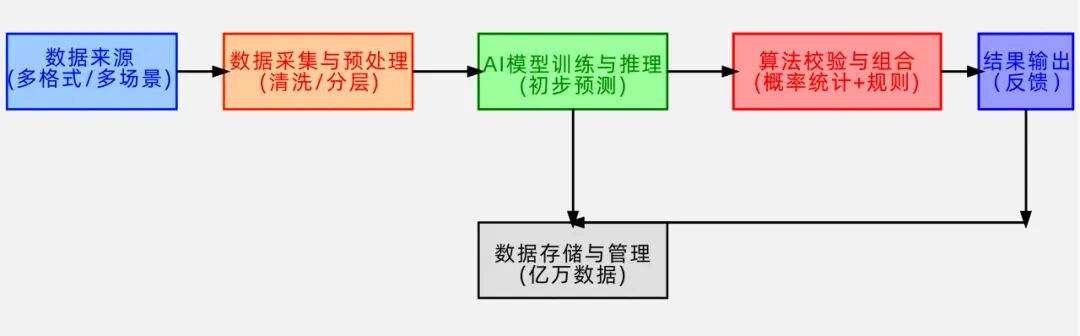
AI and Algorithm Collaboration Architecture
06
Comparative Analysis of Deepseek-AI Evolution Architecture Chart Assumptions
Designing a microservice architecture
First version: basic linear process (data → model → validation → output).
Optimized version: modules for monitoring data quality and user feedback have been added.
Final Version: Strengthen the probability statistics module and clarify the relative benchmarking path.
| Characteristics | First version of the architecture | Optimized version of the architecture | Final architecture |
|---|---|---|---|
| Data monitoring | No | Independent quality control module | Integrated enhanced processing and monitoring process |
| Feedback Mechanism | Simple feedback on results | Multi-level user feedback loop | Structured return of assessment data |
| Verification method | Validation by static rules | Dynamic threshold setting | Relative Baseline + Probability Distribution + Double Validation |
| Result presentation | One PDF output | Confidence Interval Visualization | Integrated Multidimensional Data Dashboard |
closed loop feedback mechanism
Through regular evaluation and timely updates, a closed-loop mechanism is formed, based on forecasting results and user feedback. Each small improvement adds up to a “1% improvement in accuracy,” which ultimately results in a significant improvement in overall performance.
07
expected benefit
| Direction | Result |
|---|---|
| Increased efficiency | The process preparation cycle has been reduced by 40%. NC programming efficiency increased by 200%. |
| Quality guarantee | The average annual increase in dynamic iteration accuracy is ≥12%. Manual intervention is reduced by 60%. |
| Cost optimization | The complexity of manual data processing and verification time are reduced. |
| Smart Update | More efficient, accurate and sustainable optimization of the pharmaceutical equipment industry is achieved. |
Deepseek-AI agent or Truking Technology has a strong core competitiveness in the field of intelligent pharmaceutical equipment due to "relative + precision mode". Through the collaboration of AI technology and algorithms combined with closed-loop data management and dynamic inspection mechanism, Truking Technology will not only improve production efficiency and process accuracy, but also provide strong support for the digital upgrading of the industry. In the context of the rapid development of artificial intelligence and the industrial Internet, Deepseek-AI agent will set a new standard for the intelligent transformation of the pharmaceutical equipment industry.
Deepseek-AI-agentApplication in Truking Technology Medical Equipment Intelligent Manufacturing SystemPractical thoughts on deploying Truking TechnologyAI --DeepSeek's privatized hierarchical deployment is more suitable for medical device use cases.